Pro tip · Bait
Cut fish. In Texas the standard is cut common carp.
Start with the fish, then the place. The state fisheries biologists say alligator gar "still inhabit the Mobile Delta and adjacent coastal waters," and that inland catches are now rare. That makes the Delta the first and best bet: slow, brackish water over silt and mud, with backwater bays and river mouths.
The state also has gar records and photos from the Conecuh River, Dog River and Fish River. Old records show how far up they once ran: a 140-pound fish came out of the Alabama River near Claiborne Ferry in 1928, and the Tombigbee and Black Warrior show up in 1950s newspaper photos. Today, think lower river and coast first.
Across the line in the Florida Panhandle the rule is different: Florida ended taking alligator gar in 2006, and none may be taken there without a special permit.
The Alabama creel page lists no separate bowfishing rule for alligator gar. One thing every bowfisher should know: a gar shot with an arrow cannot be released, so be sure of the fish before you draw.
| Where | Rule | Source |
|---|---|---|
| Alabama, rod and reel | One alligator gar per person per day | Alabama DCNR creel and size limits |
| Alabama, commercial gear | Alligator gar caught on commercial gear must go back in the water right away | Alabama DCNR creel and size limits |
| Alabama, size limit | None listed for alligator gar | Alabama DCNR creel and size limits |
| Florida | No take of alligator gar without a special permit (since 2006) | Florida FWC |
Keith Dees was bass fishing the Raft River in the Mobile-Tensaw Delta on Thanksgiving morning 2022, throwing a ChatterBait along the grass on 15-pound line and a medium bass rod. A gar ate it. The fish was certified at 162 pounds, 84.5 inches long with a 35.5-inch girth, the biggest freshwater fish in the Alabama record book.
| Weight | Angler | Where | When |
|---|---|---|---|
| 162 lb (state record) | Keith Dees | Raft River, Mobile-Tensaw Delta | Nov. 2022 |
| 151.75 lb | Richard Johnson | Tensaw River | Aug. 2009 |
| 151 lb 5 oz | Michael Houseknecht | Tensaw River | Aug. 2004 |
“Finally, I thought of using one of my heavy bass rods with a big hook on it like a gaff.”
“They just wanted to know the fish were out there and are healthy.”
Texas has the most studied alligator gar fishery in the country, and its state biologists publish how anglers there catch them. Their advice fits the Delta too. The most common setup is cut carp on a 3/0 treble or J-hook, tied to strong braided line through a steel leader, with or without a weight.
The hard part is patience. A gar grabs bait sideways and runs with it. Set the hook too soon and, the Texas biologists say, you may hook only about half the fish. Let it swallow first.
Cut fish. In Texas the standard is cut common carp.
A 3/0 treble or J-hook. Texas biologists suggest plain (bronze, not stainless) Aberdeen hooks no larger than 3/0; 4/0 and up hurt more fish when swallowed.
Steel leader to strong braided line. Texas biologists say to use non-stainless-steel leaders and hooks.
Wait for the fish to stop, turn and swallow before you set the hook.
Gar spawn in flooded shallow vegetation in spring, once water passes 68°F (April and May in Texas).
Alligator gar grow slowly and usually do not spawn until about 10 years old, and Texas biologists say the species is declining or gone in many parts of the Southeast. A big female you release is a fish that has been in that river a long time.
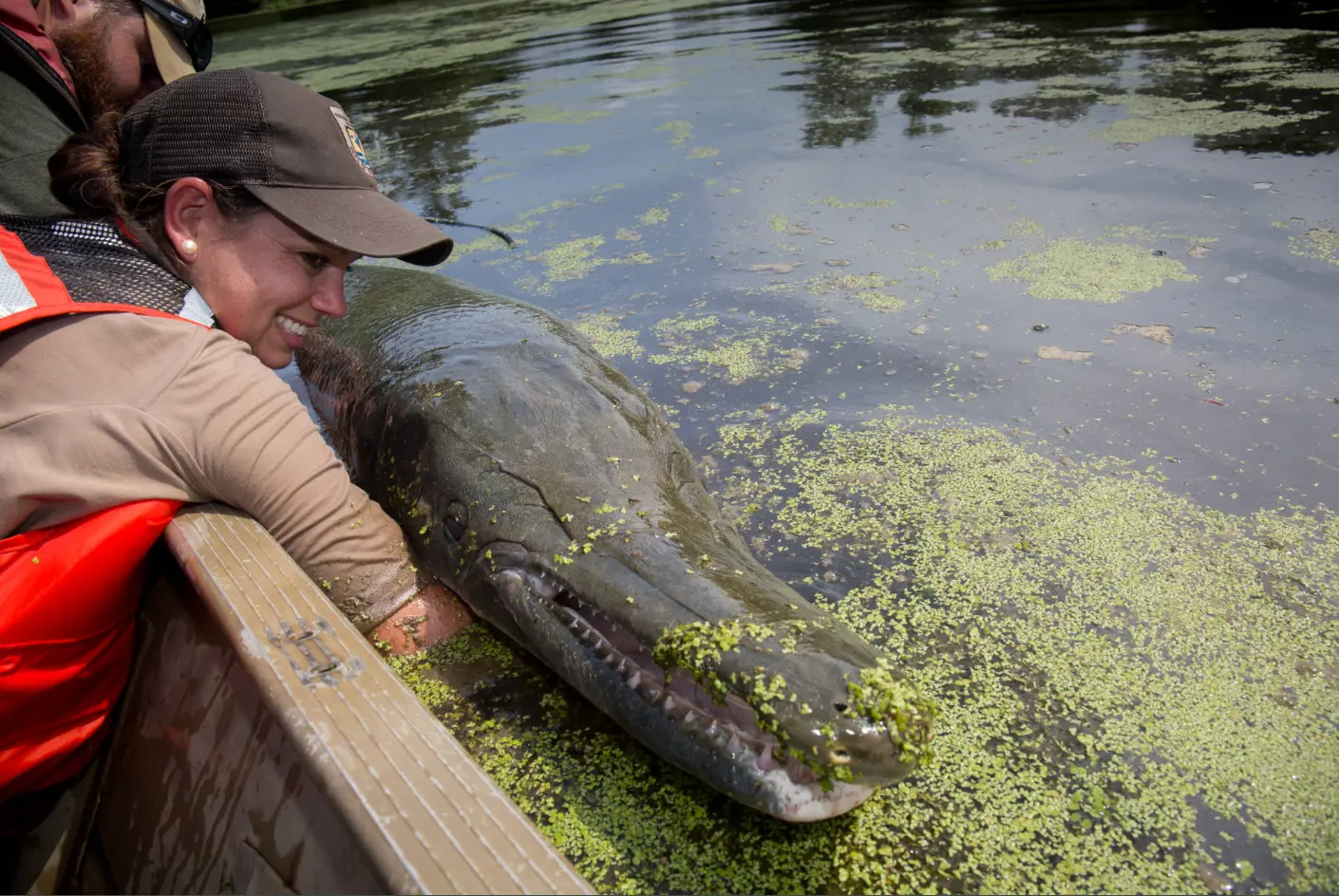
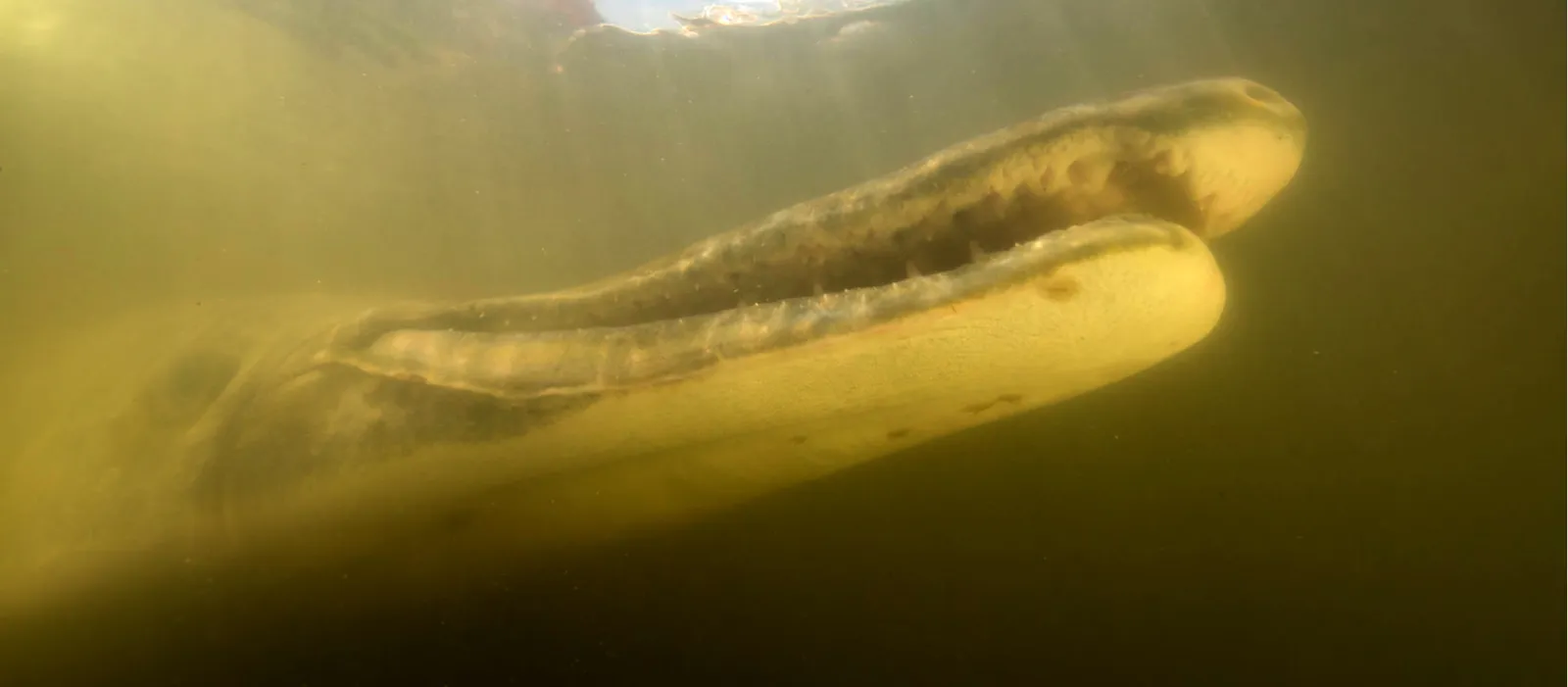
Look at the snout from above. An alligator gar has a short, wide snout, like an alligator. Adults have two rows of teeth in the upper jaw; every other gar has one. Longnose gar have a long, narrow beak, and spotted gar have dark spots on the head, body and fins. Small alligator gar can be mistaken for spotted gar.
Data last reviewed: 2026-11-23