Palisades Park
scenic
Blount County-operated park on a bluff above Oneonta with overlooks, hiking trails, and preserved pioneer cabins — 15-20 minutes from the Inland Dam ramp.
Written by Atlas Editorial · Last updated
Inland Lake is a 1,557-acre Birmingham Water Works reservoir on the Blackburn Fork in Blount County — clear, deep (mean depth 77 ft), 32 miles of shoreline, two public Hwy 75 ramps, $5 launch fee.
Inland Lake is Birmingham's water-supply lake, not a resort reservoir — 1,557 acres the Birmingham Water Works Board dammed on the Blackburn Fork of the Little Warrior River in 1939, nine miles southwest of Oneonta in Blount County. The board owns every foot of shoreline, so there's no lakefront development, no private docks marching down the coves, no marina row. What you get instead is a clear, very deep lake (mean depth 77 feet, drainage area only 70 square miles) with 32.25 miles of undeveloped bank, two public ramps off Highway 75, and a $5 daily launch fee patrolled by the Blount County Sheriff's Department. The fishery is honest small-lake Alabama — largemouth, spotted bass, crappie, bream, and channel catfish — with a seasonal drawdown that averages 16.4 feet each fall to feed Birmingham's taps before winter rains refill the pool. Locals who know the lake fish it for the quiet as much as the bite.
“Inland Lake holds fish in patterns you can set your watch to. The bite isn't a secret — it's what most fishermen don't know about where the grass thins onto a hard ledge.”
Alabama Fishing Atlas Editorial
Major and minor solunar windows shift daily with the moon’s transit. Fish the windows above, or check the Seasonal Playbook below for Inland Lake’s current pattern.
March through May is the best open window on Inland. The BWWB has refilled the pool after the late-fall drawdown, water climbs from the low 50s into the 70s, and largemouth push into the Blackburn Fork inflow and the Allgood-end creek arms to stage and spawn. A square-bill crankbait on the clear-to-stained seam after rain, a spinnerbait on the timber edges, and a wacky Senko on the spawning flats carries the pre-spawn bite. Spotted bass work rock banks in the lower pool and stage earlier than the largemouth — a jerkbait on ten-second pauses on bluff transitions pulls staging spots in water temps in the upper 50s. Crappie slide into the standing timber in the arms by mid-March; long-line a 1/16-ounce jig through the timber, vertical on marked schools. Bream beds show up on shallow bank gravel by late April. Launch fee is $5 at either ramp, and weekday mornings are empty water.
June through August the lake stratifies — mean depth 77 feet means a real thermocline sets up by mid-June, and the bite moves deep or shady fast. Largemouth work shaded timber pockets and undeveloped bank cover in the back of the arms at first light, then pull off to rock bluffs and main-lake ledges through the day. A Texas-rigged worm flipped to shade, a buzzbait at dawn on the upper pool, and a drop-shot on the 15-30 foot bluff edges cover the pattern. Spotted bass hold tighter to rock — a shaky head on the bluff walls near the dam is the lower-pool program. Channel catfish bite nightcrawlers and cut bait on the main pool after dark. Crappie go deep and suspend on the timber tops in 15-20 feet. Water remains clear and deep all summer because BWWB pulls from the bottom, not the surface.
September through November is the transition nobody fishes because the drawdown scares them off. The BWWB starts dropping the pool in late summer to hold reserve capacity, and by October-November the lake has already lost 10-plus feet of water on its way to the 16.4-foot average low. That exposes structure — stumps, rock points, old creek channels — that stays underwater the rest of the year. Shad move into the creek arms, largemouth follow them onto the newly exposed drawdown line, and a lipless crankbait worked parallel to the new shoreline, a ChatterBait on the creek-mouth gravel, and a jig on the exposed stumps produces fish most anglers never see. Crappie reload on timber tops in 10-16 feet. Water stays clear, the crowds disappear, and the locals who fish the drawdown clean up through November.
December through February the pool sits at its annual low and the lake fishes like a clear-water highland reservoir in miniature. Largemouth and spotted bass group on main-lake rock bluffs and the deepest water near the dam. A suspending jerkbait worked on long pauses on sunny afternoons above 48°F, a jigging spoon vertical on the 30-50 foot bluff ledges, and an Alabama rig on the main-channel drops when the surface drops into the 40s — all work because water clarity stays high on a deep drawdown lake. Crappie stack in 18-25 feet on timber and brush tops in the arms; tiny 1/32-ounce jigs tipped with minnows, vertical fish, slow hookset. The pool refills through late winter rains, and by late February the pre-spawn creeps in on the upper end. Launch fee still $5 year-round; both ramps stay open per Blount County Sheriff patrol.
Primary bass species — undeveloped shoreline timber, standing timber in the arms, and rock banks on the deeper main pool. Premier Angler and Fishbrain both list largemouth as the headline Inland species.
Secondary bass on rock banks and deeper bluff edges — Fishbrain notes spots alongside largemouth at Inland.
Creek arms and flooded timber in 8-20 ft; stable population per Premier Angler's Blount County species list.
Bream on bank structure year-round; Premier Angler lists bluegill and sunfish as common Inland species.
Channel catfish in the main pool — Premier Angler lists channel cats as the signature Inland catfish species (no meaningful flathead/blue footprint on a lake this small).
scenic
Blount County-operated park on a bluff above Oneonta with overlooks, hiking trails, and preserved pioneer cabins — 15-20 minutes from the Inland Dam ramp.
recreation
Legendary Southeast bouldering venue on Chandler Mountain north of Oneonta. Hosts the annual Triple Crown bouldering event. Open for camping and day-use.
historic
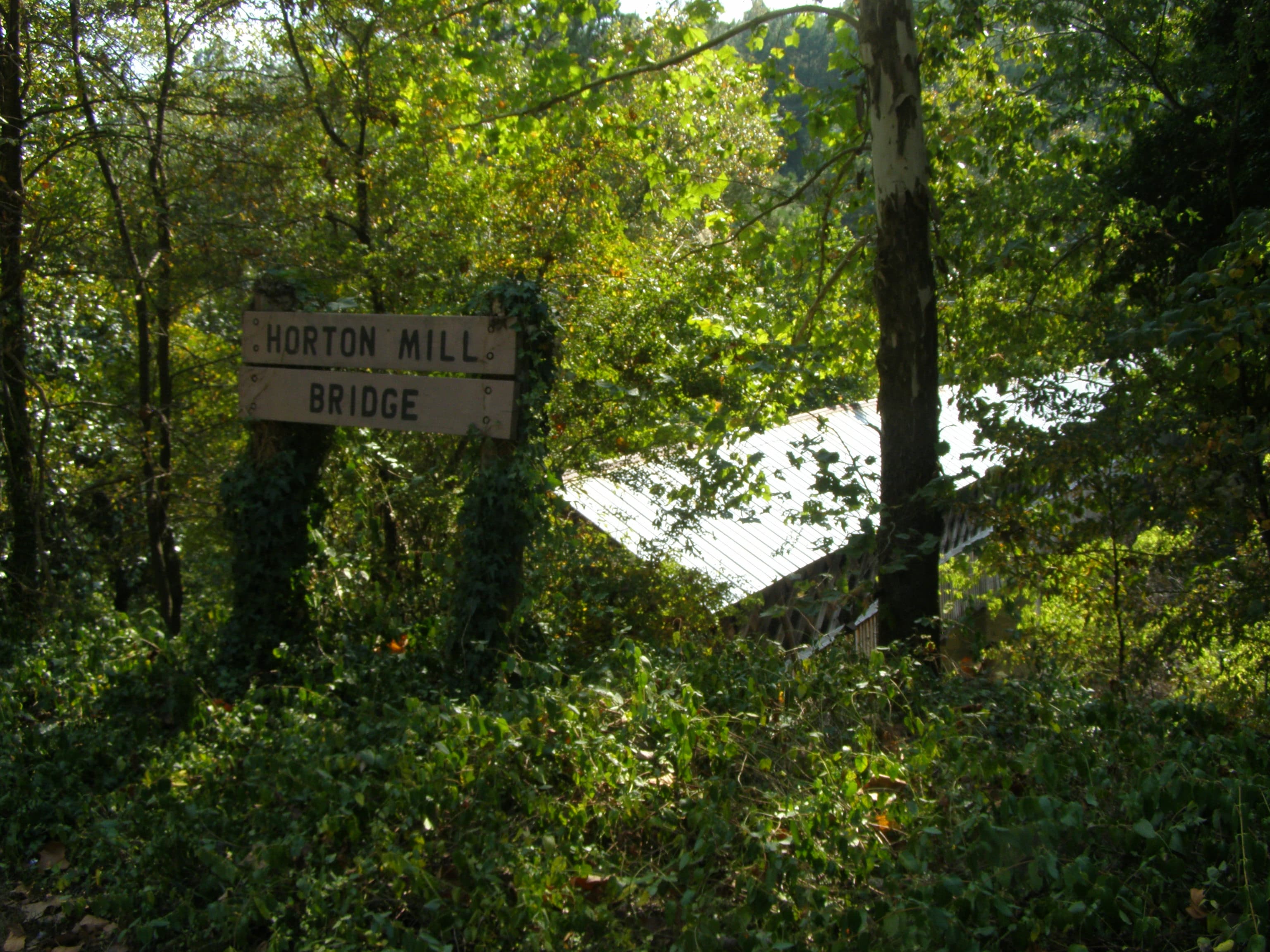
National Register covered bridge on State Route 75 north of Oneonta — one of three historic covered bridges still standing in Blount County (with Swann and Easley).
scenic
Designated Wild and Scenic-quality whitewater run on the west side of Blount County — springtime paddling, seasonal fishing for spotted bass and redeye.
Inland sits in the middle of Blount County, roughly 25 minutes off I-65 via Hwy 75, which makes it a quick drive from Birmingham for a half-day on the water. The nearest towns — Oneonta to the northeast, Allgood to the north, and Warrior to the south — aren't tourist stops, but Blount County does pull its share of Alabama outdoor traffic. Palisades Park sits on a bluff above Oneonta with overlooks, hiking trails, and pioneer cabins; Horse Pens 40 up on Chandler Mountain is one of the Southeast's legendary bouldering venues and hosts an annual climbing gathering. The county is famous for its covered bridges — Swann, Easley, and Horton Mill — all on the National Register and drivable in a loop. The Locust Fork of the Black Warrior River cuts through the county's western edge for whitewater and scenic paddling. None of it is a beach resort, but if you're bringing family along with your rod, there's enough to round out a day without leaving Blount.
Oneonta
Lower-end public ramp 9 miles SSW of Oneonta, off Hwy 75 on Inland Dam Road. Patrolled by the Blount County Sheriff's Department; $5 boat launch fee collected at the ramp. Access to the deepest water in the reservoir near the 1939 BWWB dam.
DirectionsAllgood
Upper-end public ramp near Allgood, off Hwy 75 on Inland Boat Landing Road. Patrolled by the Blount County Sheriff's Department; $5 boat launch fee. Launches into the shallower Blackburn Fork inflow end of the reservoir.
DirectionsInland Lake is a Birmingham Water Works Board municipal water supply reservoir. Both public ramps (Inland Dam Road and Inland Boat Landing Road, both off Hwy 75) charge a $5 boat launch fee collected by the Blount County Sheriff's Department. The pool experiences a significant seasonal drawdown averaging 16.4 feet, with lowest levels in late fall before winter rains refill the lake. BWWB owns the entire shoreline — no private docks, no lakefront development. Verify BWWB and ADCNR rules before each trip; water-supply reservoirs can have access or use restrictions that change without wide notice.
Alabama fishing license required for all anglers 16 and older (residents and non-residents).. Always verify current rules before your trip.
Full Alabama fishing regulations ›67,100 acres
Bass · Crappie
River
Stripers · Bass
10,370 acres
Bass · Crappie
15,930 acres
Bass · Catfish
More on Inland Lake:
Fishing regulations, water conditions, and seasonal patterns change. Alabama Fishing Atlas provides informational content only. Verify all regulations with the Alabama Department of Conservation and Natural Resources before fishing, keeping any fish, or launching watercraft. We are not liable for decisions made based on information published here. Full disclaimer →
Data last reviewed: 2026-04-18